
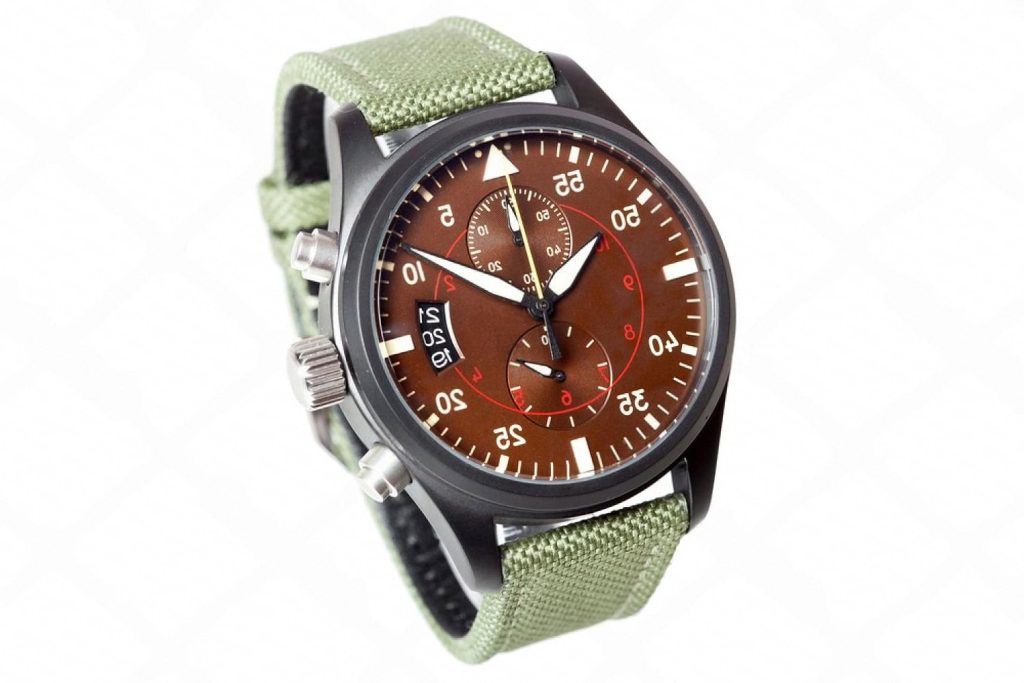
A collector in Jumeirah opened his safe last Ramadan to pull out a Patek he had not worn in fourteen months. The dial was flawless, the strap still smelled of the boutique, and the second hand was dead still. He shook it, felt the rotor spin, watched it tick for maybe forty seconds, then stop again. When he took it to a service centre off Sheikh Zayed Road, the estimate came back at just over eleven thousand dirhams. The lubricants inside the movement had congealed, the mainspring had taken a set, and the automatic module needed a full overhaul before the watch would keep time again. He had assumed a safe was enough. It was not.
This is the quiet cost of leaving an automatic watch alone. It does not break dramatically. It ages in silence, and by the time you notice, the resale value has already moved against you.
What actually happens inside
The slow death of a stationary movement
An automatic watch is a machine that expects motion. The rotor swings with the movement of your wrist, winds the mainspring, and pushes fresh lubricant across dozens of tiny pivots and jewels. Leave the watch flat in a drawer for six or nine months and three things start to go wrong at once.
First, the synthetic oils used in modern movements begin to migrate and thicken. Watchmaking lubricants are engineered for constant micro-motion, not for sitting still in a hot cupboard in Dubai where ambient temperatures on an unconditioned shelf can swing well above thirty degrees. Second, the mainspring, if the watch was stored fully wound, develops what watchmakers call a set: a permanent loss of torque that shows up later as poor amplitude and weak power reserve. Third, moisture and dust find their way past the gaskets, especially in coastal humidity from Al Barsha down to Ras Al Khaimah, and start to work on the case seals.
None of this is visible when you pull the watch out. It only shows up on a timegrapher, or worse, in the service quote.
Manufacturer guidance
What Rolex, Patek and Omega actually recommend
Most major houses are cautious in how they phrase it, but the guidance is consistent. Rolex service documentation recommends a full overhaul every ten years, and explicitly notes that watches left unworn for long periods should either be wound manually once a week or kept on a winder. Patek Philippe suggests the same weekly hand-wind for pieces in rotation, and points out that stationary storage accelerates lubricant degradation. Omega and Jaeger-LeCoultre publish similar advice in their care booklets.
The common thread: a movement that runs at least occasionally will reach its scheduled service in healthy condition. A movement that sits idle for two or three years often needs service before its time, and the invoice reflects that. In the UAE, where a full Rolex service runs anywhere from three thousand to nine thousand dirhams depending on the reference, that is not a trivial line item.
For anyone with more than two or three automatics, the maths quickly points toward proper storage. A quality automatic watch winder box from a house like Agresti solves the motion problem and the security problem in one object, which is why you see them showing up more often in villas across Emirates Hills and Saadiyat.
How this hits resale value on the secondary market
The pre-owned watch market in Dubai is sharp. Buyers at DIFC boutiques, at the shops around the Gold Souk, and on regional platforms will inspect a piece with a loupe, a timegrapher and a service history file. A watch that runs plus or minus two seconds a day with strong amplitude commands its full market price. The same reference running plus fifteen seconds with weak amplitude will trade at a discount of anywhere from eight to twenty percent, sometimes more if the buyer suspects the movement has been sitting.
Service papers matter too. A recent service stamp from an authorised centre adds confidence and, in the case of steel sports Rolex references, can add real money. A watch that has clearly gone years without care, even if it currently ticks, signals a bill coming for the next owner. Buyers price that bill in.
There is also the question of the automatic module itself. On complicated pieces, chronographs, perpetual calendars, annual calendars, the automatic winding assembly is one of the more expensive sub-assemblies to rebuild. A collector selling a stopped perpetual calendar in Dubai will almost always take a bigger hit than one selling a stopped three-hander, simply because the buyer knows the repair path is longer.
What to look for in a proper watch safe or winder
Not all winders are equal, and not all safes protect a watch the way owners assume they do. A cheap winder that spins constantly in one direction can actually overwind and stress the movement. A safe without climate control can sit at forty degrees in a Sharjah apartment during August and cook the oils faster than an open drawer would.
- Adjustable turns per day (TPD). Different calibres need different winding rates. Rolex 3135 movements are happy around 650 to 800 TPD. Some Panerai and Patek calibres want less. A good winder lets you set this per module.
- Bidirectional and programmable direction. Some movements wind in one direction only, others in both. A winder that can be set to clockwise, counter-clockwise or alternating is essential if you own more than one brand.
- Silent motors and rest cycles. Quality winders run in short bursts with long rests, closer to how a wrist behaves. Constant spinning is a red flag.
- Climate and humidity control. In the Gulf climate this is not optional for long-term storage. Look for safes with active humidity regulation, target around fifty percent relative humidity, and stable temperature.
- Real security rating. Certified fire and burglary ratings matter for insurance. A branded winder cabinet without a proper safe body will not satisfy most household policies in the UAE above a modest declared value.
- Interior finish. Soft leather cuffs, no exposed metal edges near the case, and enough clearance so bracelets do not rub against neighbouring watches.
If you are buying for a collection that already runs into six figures of dirhams, treat the storage like part of the collection. A properly specified winder cabinet is cheaper than one avoidable service, and far cheaper than the resale discount on a tired movement.
A watch that has been cared for shows it on the timegrapher before it shows it on the dial. Buyers in this market read both.
The practical middle ground
You do not need a winder for every watch you own. If a piece is in weekly rotation, wearing it is the best possible care. Manual winding once a week for a rested piece, a few dozen crown turns, is genuinely fine and mirrors what the manufacturers suggest. Winders earn their place for the watches you love but rarely wear: the dress piece that comes out for weddings, the complication that lives in the safe most of the year, the inherited watch you refuse to sell.
Store the rest properly. Keep them out of direct sunlight, away from magnets (phones and tablet covers are the usual culprits), and in a stable, dry environment. Do that, and when you eventually decide to sell, the watch will show up at the dealer running clean, with strong amplitude, and priced at what it is actually worth.
Frequently asked questions
How long can an automatic watch sit unworn before it needs service?
Most watchmakers agree that six to twelve months of complete inactivity is the point where lubricants start to degrade noticeably. After two to three years of stationary storage, expect at minimum a movement cleaning and re-oiling before the watch performs to spec again, even if it still runs when you pick it up.
Does storing an automatic watch in a safe protect it from these problems?
A safe protects the watch from theft, dust and impact, but it does nothing about the internal issues caused by stillness. Oils still congeal, mainsprings still take a set, and in the UAE climate an uncontrolled safe interior can actually accelerate lubricant breakdown because of trapped heat. A safe with climate control and integrated winders solves both problems at once.
Can a watch winder damage my automatic watch?
A poorly designed winder can, yes. Continuous one-direction spinning at too high a rate can stress the winding bridge and slipping clutch on some calibres. A proper winder uses rest cycles, adjustable turns per day and selectable direction so it mimics wrist motion rather than a drill. Match the TPD and direction to your specific movement, most manufacturers publish these numbers or your local watchmaker will know.
How much resale value can an unwound, poorly stored watch actually lose?
On the Dubai pre-owned market, expect a discount of roughly eight to twenty percent for a watch that clearly needs service, and more on complicated pieces where the service bill is high. The bigger hit is often invisible: buyers walk away entirely from watches with obvious neglect, so the piece sits longer and eventually sells to a dealer at trade price rather than retail.
Do I need a winder if I only own one or two watches?
Probably not, if you actually wear them. A watch in weekly rotation stays healthy on its own. Winders make sense when you have pieces you love but rarely wear, or a collection large enough that some watches sit idle for months at a stretch. For a single daily-wear automatic, a manual wind once a week during a long break is enough.
What humidity and temperature should I aim for in watch storage?
Around fifty percent relative humidity and a stable temperature between eighteen and twenty-four degrees Celsius is the sweet spot. In UAE apartments and villas, an unconditioned cupboard can swing well above this in summer, which is hard on both movements and leather straps. A safe with active climate control, or at minimum a room that stays air-conditioned year round, protects the collection.

I write about how sites, digital tools and work processes affect real work. I am interested not in trends for trends’ sake, but in clear solutions that make the digital environment more convenient, more stable and more useful.